Teaching Kids to Clean Up After Themselves
Moving beyond assigned chores to everyday self-sufficiency
A mom's perspective on teaching kids the habit of picking up after themselves, not just completing assigned tasks.
Teaching Kids to Clean Up After Themselves
There's a difference between a kid who does their assigned chores and a kid who notices their shoes are in the middle of the hallway and puts them away. Both matter, but that second one, the unprompted awareness, is what most of us are really trying to build. And if I'm being honest, it's the one I struggled with the longest.
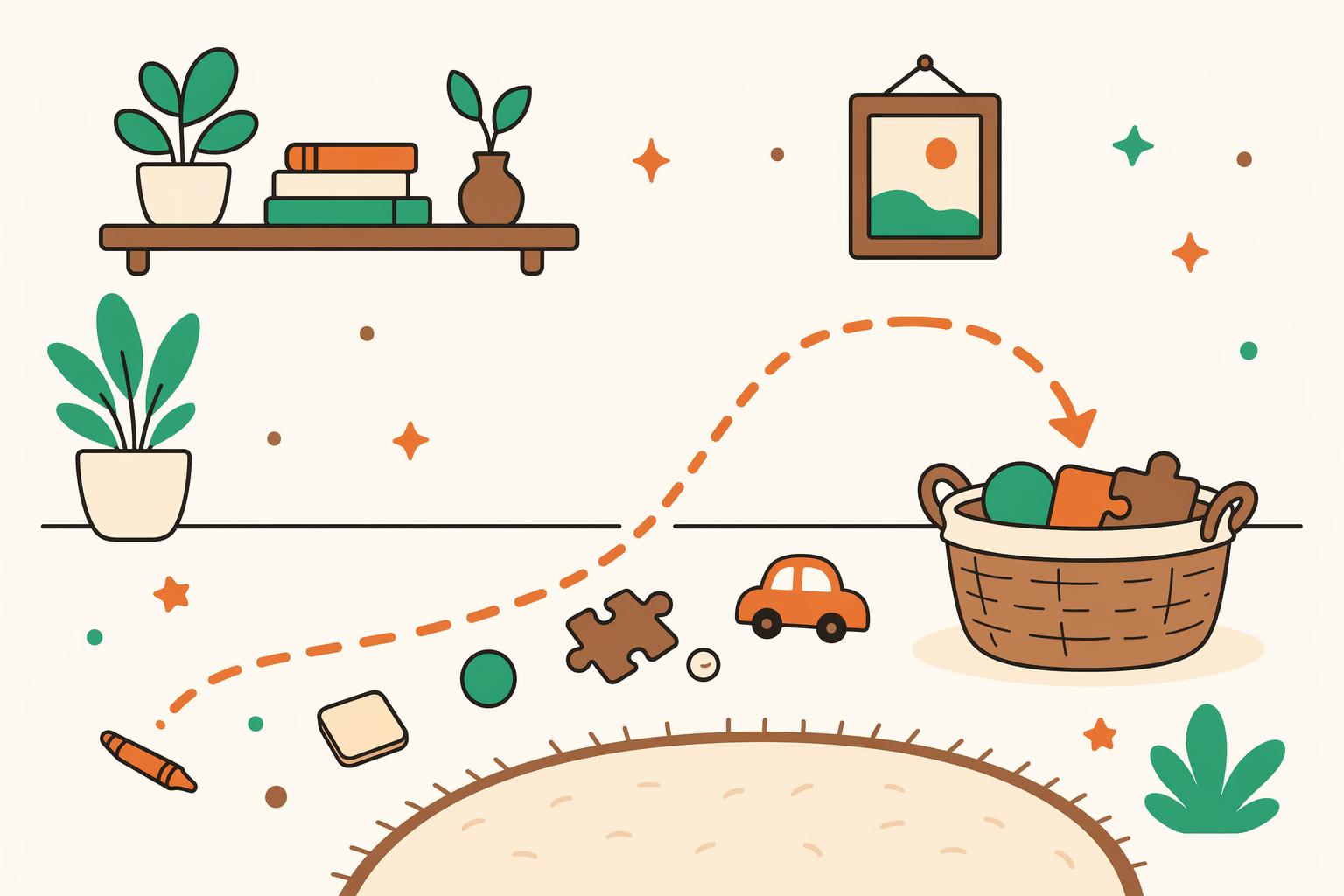
For a while, I thought having a solid chore chart was enough. My kids did their tasks. They checked their boxes. But then I'd walk through the living room and find craft supplies scattered across the table, a cereal bowl on the couch, and a jacket draped over the banister like we were running a lost-and-found. The assigned chores were getting done, but the ambient mess, the trail of daily life, went completely unnoticed by everyone except me.
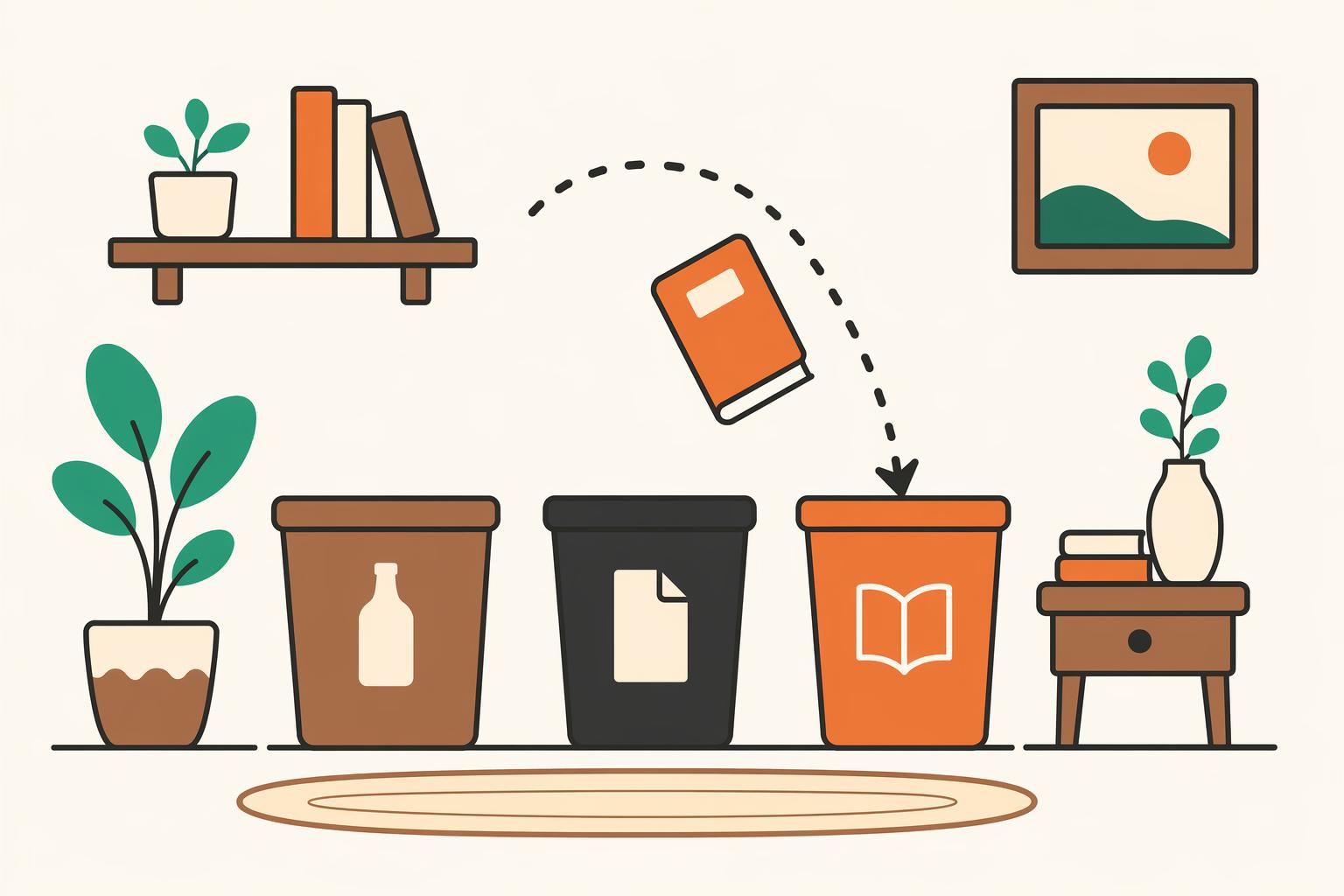
The shift started when I realized I was treating "cleaning up after yourself" as something that should be obvious, when in reality it's a skill that needs to be taught just like any other. Kids aren't born knowing that the act of getting something out comes with the responsibility of putting it back. That connection has to be built through repetition, modeling, and a lot of patience.
I started small and specific. Instead of saying "clean up this mess", which is vague and overwhelming, I'd say "you're done with the markers, so let's put the caps on and put them back in the bin." The specificity matters because it teaches the sequence. Get it out, use it, put it back. Over time, that sequence starts to become automatic, but only if it's practiced consistently in the early stages.
One thing that made a surprising difference was making the "put away" step part of the activity itself, not something that happens after. When my youngest would ask to do a puzzle, I'd say "sure, and when you're finished, the puzzle goes back on the shelf before the next thing comes out." It became a boundary of the activity rather than a punishment that followed it. That reframing was small but powerful.
Clean-Up & Tidying Helpers
As an Amazon Associate KitQuest earns from qualifying purchases.
I also had to look at the environment. If putting things away is complicated or unclear, kids won't do it. If the toy bin is in a closet, behind a door, under a pile of blankets, that's too many steps for a six-year-old. Making the "away" location simple and obvious removed a huge barrier. Open bins, low hooks, labeled shelves. The easier the system, the more likely kids are to use it without being reminded.
The hardest part for me was not just doing it myself. It is genuinely faster to pick up the jacket and put it on the hook than to call your kid back, wait for them to do it, and deal with the grumbling. But every time I picked it up for them, I was reinforcing the idea that someone else would handle it. The short-term efficiency was costing me the long-term lesson. So I started holding the line, kindly, calmly, but consistently. "Your jacket is on the floor. Please hang it up before you head outside."
There were days when this felt like all I did. Redirect, remind, wait. Redirect, remind, wait. But somewhere around the third or fourth month of steady consistency, something shifted. I'd see my older one clear her plate without being asked. My younger one started putting his shoes on the rack by the door, not perfectly, but voluntarily. Those moments were quiet, but they were everything.
Teaching kids to clean up after themselves isn't about perfection or having a spotless house. It's about building the kind of awareness that serves them for the rest of their lives, in shared apartments, in workplaces, in relationships. The kid who learns to notice their own mess and take ownership of it is learning something much bigger than tidiness. They're learning to see themselves as someone whose actions affect the space around them.
And that awareness, once it takes root, tends to grow in directions you didn't even plan for.
Sources
- Tepper, D. L., Howell, T. J., and Bennett, P. C. (2022). Executive functions and household chores: Does engagement in chores predict children's cognition? Australian Occupational Therapy Journal.
- Rossmann, M. M. (University of Minnesota). Involving children in household tasks: Is it worth the effort?
- Center on the Developing Child at Harvard University. InBrief: Executive function skills for life and learning.
Try KitQuest free
The family chore app behind these free resources: children earn points for chores, unlock achievements, and trade them for rewards you approve. Free for up to 2 children.
Get KitQuest free →